How to Troubleshoot a Garbage Disposal That Won’t Start
Ever gone to clear the sink after dinner only to find your garbage disposal as silent as a stone? The sudden stillness can be unsettling. It’s a common hassle, and it always seems to happen when the kitchen is at its busiest.
At Argos Plumbing, we know how frustrating kitchen plumbing issues can be. That’s why we’ve put together this clear, no-nonsense guide to help you troubleshoot a garbage disposal that won’t start — safely and confidently.
Safety First 🛑
Before you poke around under the sink, pause. Garbage disposals are powerful machines. They can be dangerous if handled without care. Think of it like reaching into a blender — not a good idea if it’s plugged in.
Always follow these safety steps:
- Unplug the disposal or switch off the circuit breaker.
- Never put your hand inside the disposal, even if it seems dead.
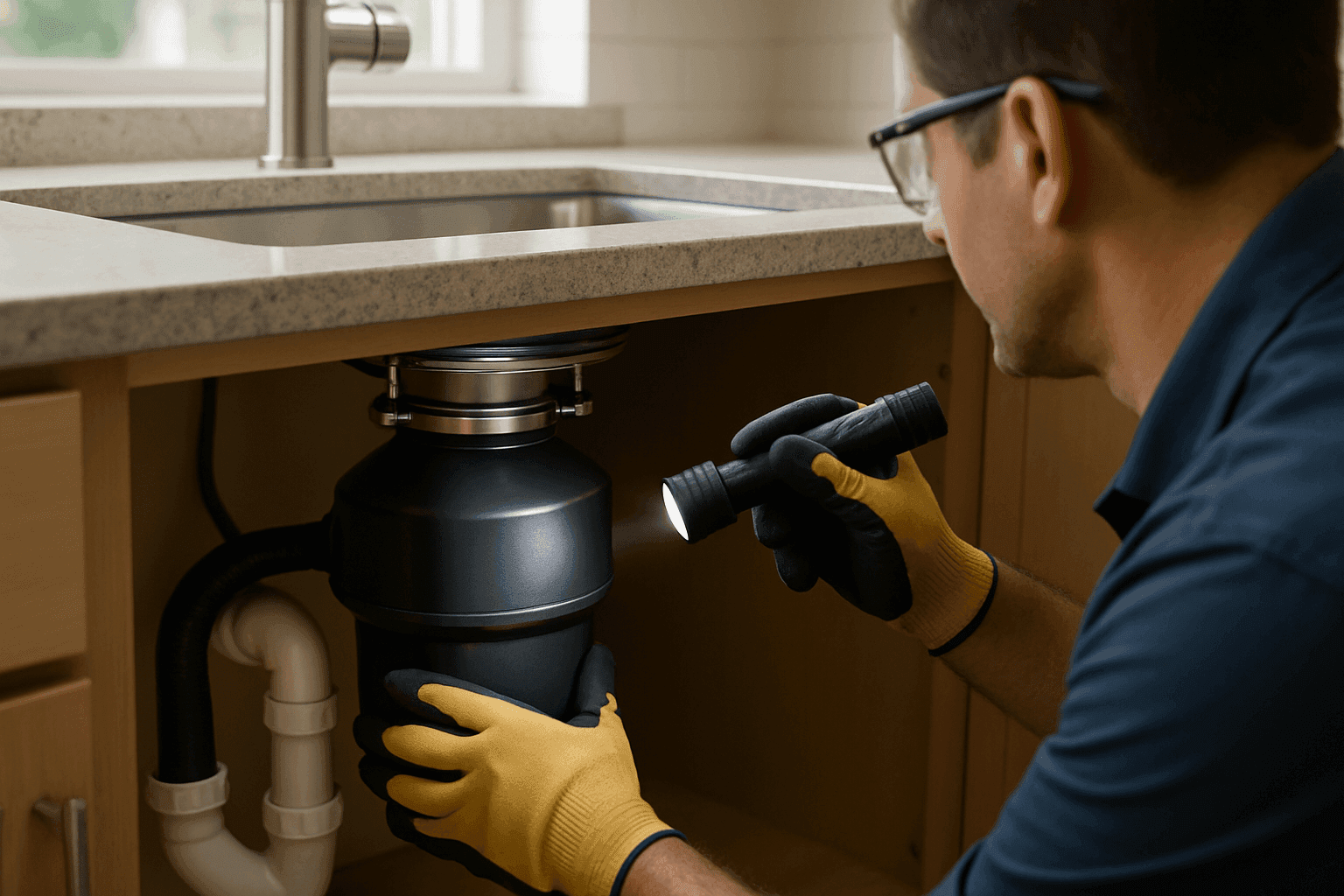
- Use a flashlight to see inside — not your fingers.
- If water or wiring looks damaged, stop right there.
- Have a towel handy in case things get messy.
The National Electrical Code (NEC) and manufacturer instructions always recommend disconnecting power before any inspection. Take this seriously to avoid shock or injury.
Common Reasons for Disposal Failure
There are a few classic reasons your garbage disposal won’t start. Picture them as usual suspects in a kitchen mystery:
- Power issues: A tripped breaker, unplugged cord, or loose connection.
- Overload protection: The reset button has popped out.
- Jams: Something hard (like a spoon or chunk of bone) is stuck.
- Worn out motor: Age or overuse can finally take its toll.
- Faulty switch: The wall switch or wiring might be bad.
Identifying which is to blame is the first step to getting your disposal humming again.
Step-by-Step Troubleshooting
Let’s walk through what you can check safely at home. Move slowly, and only try these if you’re comfortable. If something feels off, it’s time to call in help.
1. Check for Power
- Look under the sink: Is the disposal plugged in?
- Test the outlet: Plug in a lamp or phone charger to see if the outlet has power.
- Check the breaker: Go to your electrical panel. Has the kitchen breaker tripped? Flip it off and back on.
If everything’s connected and powered, move to the next step.
2. Press the Reset Button
Most garbage disposals have a small red or black button on the bottom. This is the overload protector — think of it as the “oops” button.
- Make sure the disposal is off.
- Press the reset button firmly. If it clicks, it was tripped.
- Plug the unit back in and try the wall switch.
If you hear a gentle hum but no grinding, you may have a jam.
3. Clear a Jam Safely
If the disposal hums but doesn’t spin, something may be stuck inside. Never stick your hand inside the disposal, even if it’s unplugged. Here’s what to do:
- Unplug or switch off power.
- Use a wooden spoon or the included hex wrench. (Many disposals have a place for a wrench on the underside.)
- Insert the wrench and gently turn back and forth.
- Remove the jammed item with tongs or pliers, never your fingers.
- Restore power. Try the switch.
Still nothing? Time to call in a plumber.
When to Call for Help 🚨
Some situations are best left to professionals — for your safety and to avoid bigger damage.
Call Argos Plumbing if:
- You smell gas or burning (stop immediately).
- The breaker keeps tripping after resets.
- You see water leaking from the disposal or pipes.
- There’s visible wiring damage or scorch marks.
- You’re unsure at any step — better safe than sorry.
Our team can handle anything from garbage disposal repair to full kitchen plumbing services, and we’re trained to do it safely.
Warning Signs of a Bigger Problem
Sometimes a “won’t start” is just the tip of the iceberg. Watch for:
- Frequent resets needed — could mean worn-out motor.
- Loud grinding, metal-on-metal sounds.
- Water pooling under the sink (leak alert).
- Foul odors that don’t go away after cleaning.
- Unit is over 10 years old — it may be time for a replacement.
Ignoring these can lead to water damage or even electrical hazards.
What NOT to Try
Tempted by a quick fix from a video? Some things are best left alone.
- Don’t pour chemical drain cleaners down the disposal — they can corrode parts and pipes.
- Don’t try to bypass safety switches or wiring.
- Don’t force jammed objects with bare hands.
- Don’t run the disposal with the power on while troubleshooting.
According to the Consumer Product Safety Commission, improper repair attempts are a leading cause of home electrical injuries. Safety first, always.
Preventative Maintenance Tips
Keeping your garbage disposal in shape is a lot like keeping your car running smoothly — a bit of regular care goes a long way.
- Run cold water before, during, and after use.
- Cut large scraps into smaller pieces.
- Avoid fibrous foods: celery, corn husks, onion skins can tangle blades.
- Clean with ice cubes and baking soda once in a while.
- Never pour grease or fat down the disposal.
A little caution can help you avoid future breakdowns and costly repairs.
How Much Does Repair Take? (Time & Cost Factors)
Every garbage disposal issue is different — like a puzzle with missing pieces. Simple resets or jam-clearing can take just a few minutes. More complex problems, like a dead motor or electrical fault, may require replacement and an hour or two of labor.
- DIY fixes: 5–15 minutes (if successful)
- Professional repair: Usually under an hour for most issues
- Full replacement: Typically 1–2 hours
Costs vary with the part and labor, but most repairs are less than the price of a new unit. For up-to-date pricing, call your local plumbing service.
When Is It an Emergency?
There’s everyday inconvenience, and then there’s emergency. Here’s when to act fast:
- Flooding under the sink (could damage cabinets and flooring)
- Electrical burning smell or sparking
- Backed-up water that won’t drain at all
- Gas smell (if your disposal is near a gas line)
These issues can escalate quickly. Don’t risk your safety — get professional help right away.
Frequently Asked Questions
Why did my disposal suddenly stop working?
Power surges, jams, or overheating usually cause sudden stops. Always check the reset button and breaker first.
How do I know if the motor is burned out?
If you’ve tried resetting and clearing jams, but the unit is silent or just hums, the motor could be dead. A professional can confirm.
Is it safe to use my sink if the disposal is broken?
You can use the sink, but avoid letting food scraps or oil go down the drain, or you risk clogs and further damage.
What’s the average lifespan of a garbage disposal?
Most disposals last 8–12 years with normal use and care. Old units may break down more frequently.
Local and Seasonal Considerations for Flagstaff Homeowners
Living in Flagstaff means cold winters. Sometimes, pipes and plumbing under the sink can freeze or slow down, making garbage disposal issues more likely. If you’re searching for Garbage Disposal Repair near me, remember that quick, professional attention can help prevent frozen pipes or water damage in your kitchen.
Conclusion
A stubborn garbage disposal can be a real headache, but with the right steps, you can figure out if it’s a quick fix or something bigger. Safety should always come first. If you’re ever in doubt, don’t risk it — let Argos Plumbing handle the tough stuff so you can get back to your routine.
Call Argos Plumbing now — or reach us anytime at 844-484-9980 .