Sewer Line Installation: Planning and Process Explained
If your home’s drains are slow, or if you’re hearing mysterious gurgles from deep below, it’s easy to imagine all sorts of worst-case scenarios. Sewer line trouble isn’t just a nuisance—it can disrupt your daily life, threaten your home’s safety, and leave you feeling overwhelmed.
At Argos Plumbing, we understand how stressful it is when sewer lines need attention. Our team brings years of experience to every job, setting expectations clearly and guiding you from planning through completion.
When You Need a New Sewer Line 🚦
Sewer lines work day and night, quietly moving waste away from your home. But like any hardworking system, they wear out. Sometimes, repair isn’t enough. You may need a full replacement if:
- Old clay, cast iron, or Orangeburg pipes are failing.
- You’ve experienced repeated sewer backups, slow drains, or foul odors.
- Tree roots have invaded and damaged the line beyond repair.
- A home expansion (like a new bathroom) demands an upgraded or relocated sewer connection.
- Local code requires replacement during major renovations.
A new sewer line is a big step. It’s not a quick fix, but a long-term solution. Think of it like replacing the foundation under your house, not just patching a crack in the wall.
Permitting & Planning
Every city and county has rules for plumbing work, especially below ground. Getting a permit isn’t just red tape—it’s your assurance that the work meets current standards for health and safety.
What Goes Into Planning?
- Sewer Line Inspection: Before anything else, a camera inspection maps your existing line. This helps us spot problem areas, measure pipe runs, and plan the best route for new installation. Learn more about our sewer line inspection service.
- Locating Utilities: Gas, water, electrical, and cable lines often cross paths underground. “Call before you dig” is the law, and it’s the smartest way to prevent costly accidents.
- Permit Application: Your local building department reviews the plan and issues the required permits.
- Choosing Materials: PVC, ABS, or cast iron—each has pros and cons. Modern homes usually opt for durable, corrosion-resistant plastic piping.
Expect planning and permitting to take several days to a few weeks, depending on your municipality.
Installation Steps
So, what does the process look like from the first shovel to the final flush?
1. Site Prep
- Protect landscaping and mark out work zones.
- Bring in the equipment—excavators for deep lines, shovels for tight areas.
2. Excavation
Digging is loud, messy, and sometimes disruptive. Good crews minimize the impact, keeping trenches as small as possible.
3. Removing Old Pipe
Out with the old. Sometimes, spot repairs are possible. For full replacement, the old line is removed and disposed of in accordance with local regulations.
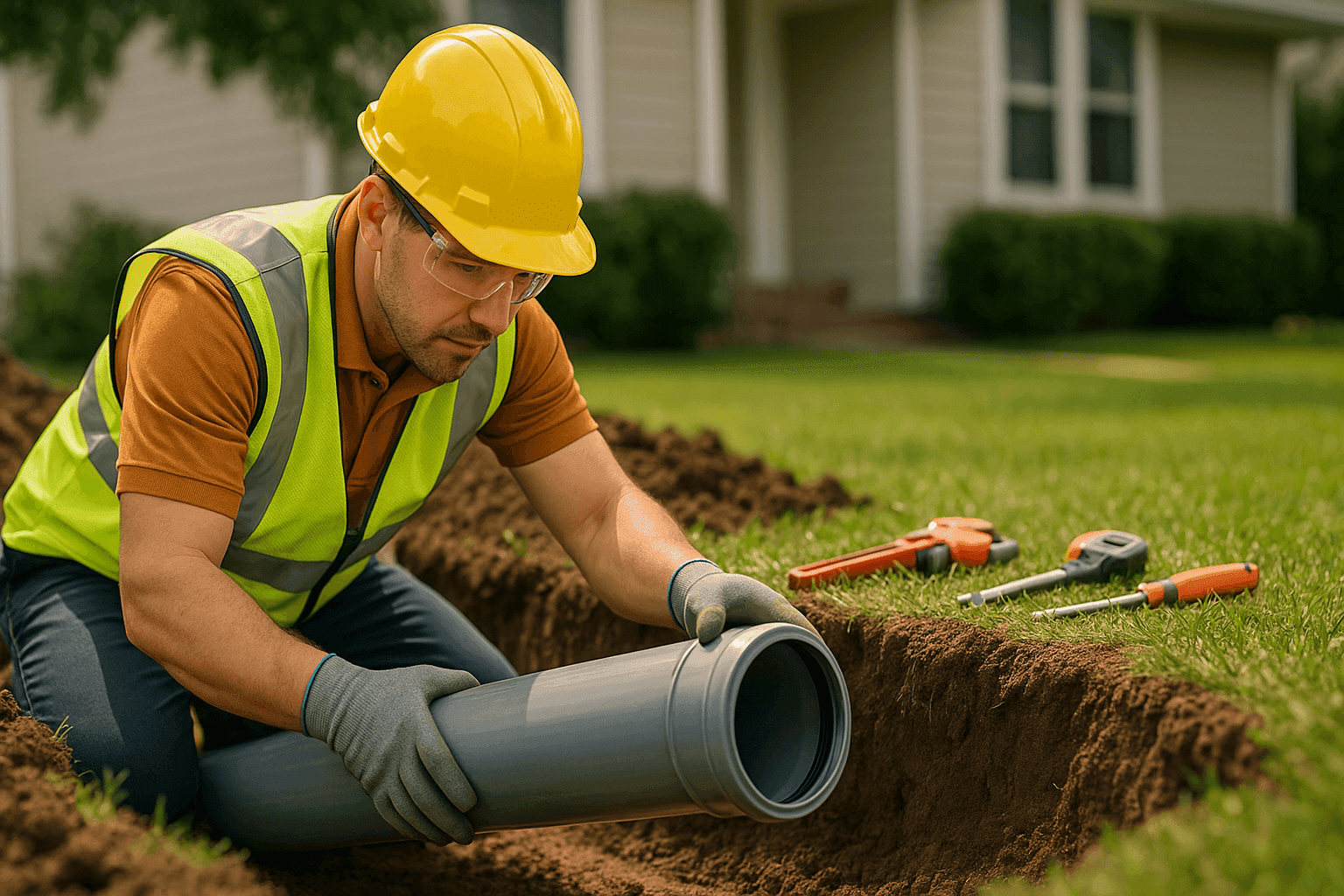
4. Laying New Pipe
- Pipes are laid at the correct slope—usually 1/4 inch drop per foot—to keep waste moving.
- Connections are sealed and tested.
- Cleanouts (access points for future maintenance) are installed.
5. Inspection
Before backfilling, a city inspector checks the installation for code compliance. This step protects you from hidden problems down the road.
6. Backfilling & Restoration
Once passed, the trench is filled and compacted. At Argos Plumbing, we take care to restore your yard as neatly as possible.
Safety & Code Compliance 🛡️
Sewer work is no place for shortcuts. Proper installation isn’t just about moving water—it’s about protecting your family’s health and the environment.
- Code Compliance: We follow the International Plumbing Code (IPC) and your local city standards.
- Gas Line Safety: If gas lines are nearby, we perform gas safety checks before digging.
- Permit Inspections: Every new line must pass local inspection before it’s buried.
- Backflow Prevention: Installing backflow devices where required keeps sewage from re-entering your home during floods.
Avoiding Common Pitfalls
Even well-intentioned DIYers can run into trouble with sewer line installation. Here’s what to watch out for:
- Ignoring Permits: Skipping permits can lead to fines and insurance headaches.
- Poor Slope: If the pipe isn’t angled correctly, waste can collect and cause blockages.
- Wrong Materials: Not all pipes are created equal. The wrong choice can mean premature failure.
- Missing Cleanouts: Without access points, future repairs become far more difficult and expensive.
A quality installation prevents headaches for decades. Cut corners now, and you might end up starting over much sooner than you’d like.
Setting Expectations: Timeline, Disruption & Next Steps
A typical residential sewer line replacement takes 2–5 days, depending on length, depth, and site conditions. Weather, unexpected obstacles, or permit delays can add time. You may need to limit water use, especially if the old line must be removed before the new one goes in.
We recommend:
- Planning for a few days of yard disruption.
- Moving vehicles, outdoor furniture, and valuables from the work zone.
- Communicating with your plumber about pets, children, or special needs.
Practical Tips for Homeowners
- Schedule a sewer line inspection if you suspect trouble—catching problems early can save you money.
- Ask your plumber for copies of all permits and inspection records.
- Consider upgrading to modern pipe materials if your home still has clay or Orangeburg pipes.
- After installation, avoid planting trees directly above the new line.
Authoritative Resources
For more on code and safety, refer to:
- The International Plumbing Code (IPC)
- Local building department guidelines
- EPA recommendations for residential sewer systems
Frequently Asked Questions
How do I know if I need a new sewer line?
Persistent backups, bad odors, frequent clogs, and camera inspections showing major blockages or breaks are common signs.
Can I stay home during the installation?
Yes, but expect some noise and disruption. Your water service may be briefly interrupted.
Will my yard be damaged?
Some disruption is unavoidable, but careful planning and restoration help minimize long-term impact.
How much does a typical sewer line installation cost?
Costs vary with length, depth, materials, and access. For a ballpark range, speak directly with your plumbing professional.
Local & Seasonal Considerations
In some climates, frozen ground can delay digging during winter. Heavy rain or high groundwater may also affect scheduling and site conditions. Always check with your local building department for seasonal regulations and best practices.
If you’re searching for Sewer Line Installation near me, Argos Plumbing is prepared to guide you from your first question through to a final inspection.
A new sewer line is a major project, but with the right planning and a team that communicates every step, you’ll know exactly what to expect—and have peace of mind for years to come. For Kitchen Plumbing near you or urgent pipe repairs, we’re here to help.
Call Argos Plumbing now — or reach us anytime at 844-484-9980 .