How to Prevent Plumbing Leaks During Freezing Weather
Winter can be a real test for your home’s pipes. When the temperature drops, even the smallest crack or exposed pipe can lead to disaster. No one wants to wake up to the sound of water dripping—or worse, gushing—through their ceiling or basement.
At Argos Plumbing, we know how quickly a cold snap can turn a regular winter night into a plumbing emergency. Here’s how to stay ahead of the freeze, protect your home, and save yourself a major headache.
Why Pipes Freeze and Burst 🧊
Pipes don’t freeze just because it’s cold. The real trouble starts when water inside your plumbing begins to solidify, expanding like a soda can left in the freezer. This expansion presses against the walls of your pipes, sometimes with enough force to split them wide open.
Most burst pipes happen when:
- Temperatures fall below 20°F (-6°C)
- Pipes run through unheated spaces (think garages, crawlspaces, or exterior walls)
- There’s little or no insulation
- Water sits still for hours—overnight’s the riskiest
The damage doesn’t stop at a little water on the floor. A single burst pipe can dump gallons in minutes, ruining walls, floors, and irreplaceable belongings.
At-Risk Areas of the Home
Not all plumbing is equally vulnerable. Some spots are ice magnets:
- Basements & Crawlspaces: Often under-insulated and out of sight.
- Attics: Pipes here are exposed to cold air swirling under the roof.
- Garages: Especially those with water heaters or washing machines.
- Exterior Walls: Kitchens and bathrooms along outside walls are common trouble zones.
- Outdoor Faucets & Hose Bibs: These freeze fast if not properly winterized.
Spotting these danger zones early lets you focus your efforts where they matter most.
Preventative Steps: Your Cold-Weather Checklist
A bit of preparation can save thousands in repairs. Here’s your go-to list:
1. Insulate Vulnerable Pipes
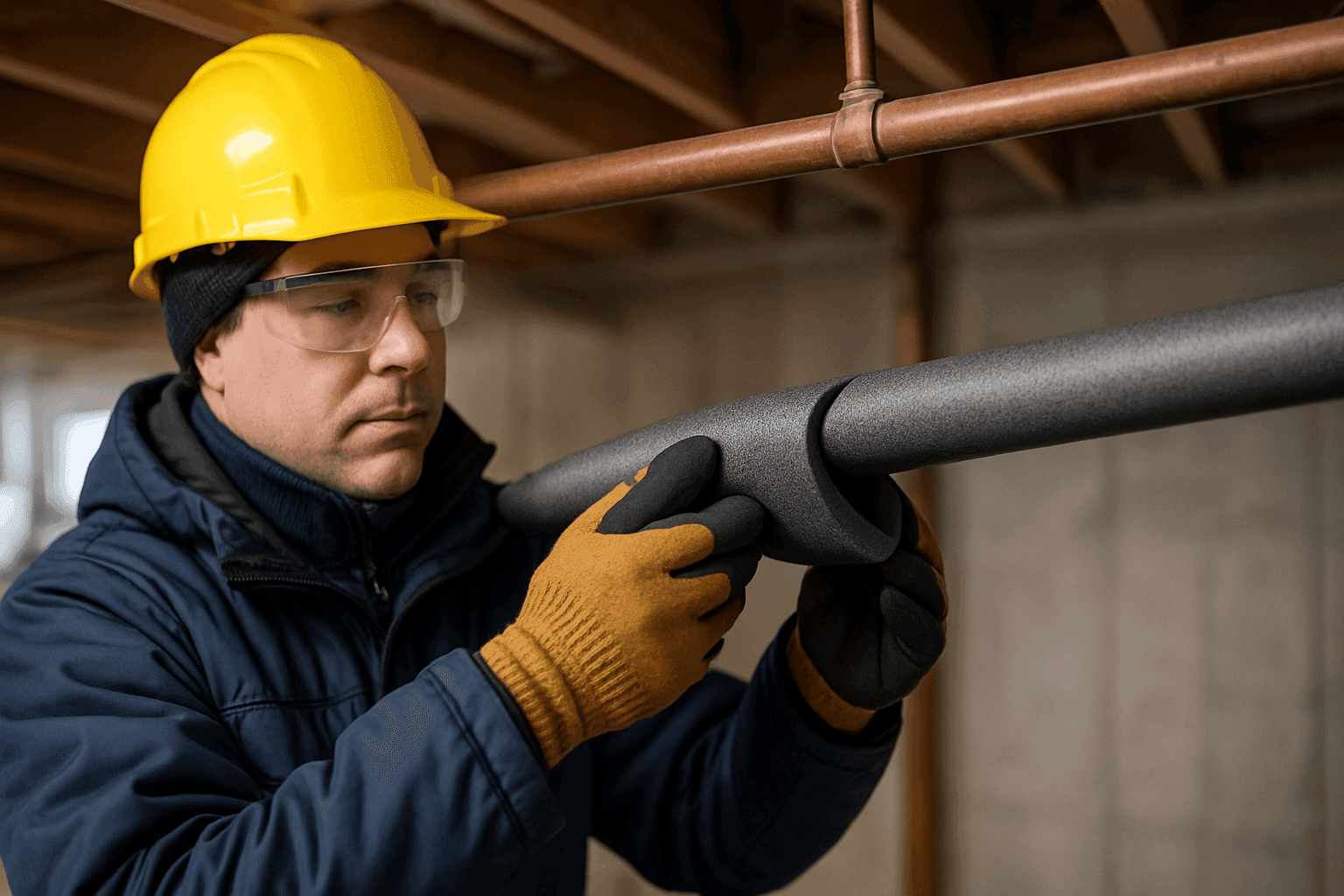
Wrap exposed pipes with foam tubing or fiberglass sleeves. Insulation acts like a winter coat for your plumbing. For hard-to-reach spots, even newspaper can help in a pinch.
2. Let Faucets Drip
A slow, steady drip keeps water moving. Flowing water is much less likely to freeze than water at rest. Focus on faucets along exterior walls or in unheated areas.
3. Open Cabinet Doors
Let warm air circulate around pipes under sinks—especially in kitchens and bathrooms along outside walls.
4. Apply Heat Tape
UL-listed heat tape provides gentle warmth directly to the pipe. Use only on pipes that are at risk and follow the manufacturer’s safety instructions.
5. Seal Gaps and Cracks
Check for air leaks near pipes. Use caulk or spray foam to seal holes where cold air gets in.
6. Disconnect Hoses & Drain Outdoor Lines
Remove garden hoses, shut off outdoor valves, and drain any water left in exterior pipes.
7. Keep the Heat On
Even if you’re away, keep your thermostat at least 55°F (13°C). Cold homes mean cold pipes.
For more details on keeping your plumbing in top shape, see our Preventative Maintenance service.
Emergency Actions if Pipes Freeze
Sometimes, despite your best efforts, a pipe freezes. Don’t panic—act fast:
- Turn On the Faucet: If only a trickle comes out, a pipe is likely frozen.
- Apply Warmth: Use a hair dryer, heating pad, or warm towels—never an open flame.
- Start Closest to the Faucet: Work your way toward the coldest section.
- Check for Leaks: Once thawed, look for cracks or water damage.
If you see water pouring out or hear hissing from the walls, shut off your main water supply and call for help immediately. For urgent needs, Leak Repair in Helena, Montana is just a call away.
Long-Term Solutions for Winter-Proof Plumbing
Prevention is more than a one-time fix—think of it as a winter ritual, like swapping in snow tires or checking your furnace.
Upgrade Insulation
Older homes often lack proper pipe insulation. Adding or upgrading insulation in attics, basements, and crawlspaces pays off year after year.
Install Frost-Proof Faucets
Replace standard outdoor spigots with frost-free models. They shut off water deep inside the wall where it’s warmer.
Reroute Exposed Pipes
If you’re renovating, consider moving pipes away from exterior walls or into conditioned spaces.
Annual Plumbing Inspections
A yearly checkup from a licensed plumber can catch trouble before it starts. Our Leak Repair and Preventative Maintenance services take the guesswork out of winter prep.
Water Filtration and Pressure Regulators
High water pressure makes pipes more likely to burst. Pressure regulators and filtration systems can help protect your plumbing for the long haul.
Cold-Weather Plumbing FAQ
Q: How do I know if my pipes are frozen?
A: If you turn on a faucet and get only a trickle—or nothing at all—a pipe may be frozen. Check pipes in unheated areas first.
Q: Can I use space heaters to thaw pipes?
A: Space heaters can help, but use them with care. Never leave them unattended or place them near flammable materials.
Q: What happens if a pipe bursts?
A: Shut off your main water right away. This stops more water from spilling out. Then call Argos Plumbing for emergency repairs.
Q: How often should I check my pipes in winter?
A: Do a quick walk-through after every cold snap, especially in at-risk areas.
Local & Seasonal Considerations
Winter in our region can be unpredictable. One week it’s mild, the next brings Arctic air. Stay alert to weather forecasts—early cold snaps catch many homeowners off guard.
Keep a flashlight handy for late-night pipe checks. If you’re leaving town, ask a neighbor to peek in or shut off your water main.
Refer to local building codes or the International Plumbing Code (IPC) for insulation and installation standards. The American Red Cross also offers reliable guidance on winter pipe safety.
Winter plumbing leaks are preventable, but fast action matters. If you’re worried about your pipes or spot a problem, don’t wait. Call Argos Plumbing now — or reach us anytime at 844-484-9980 .